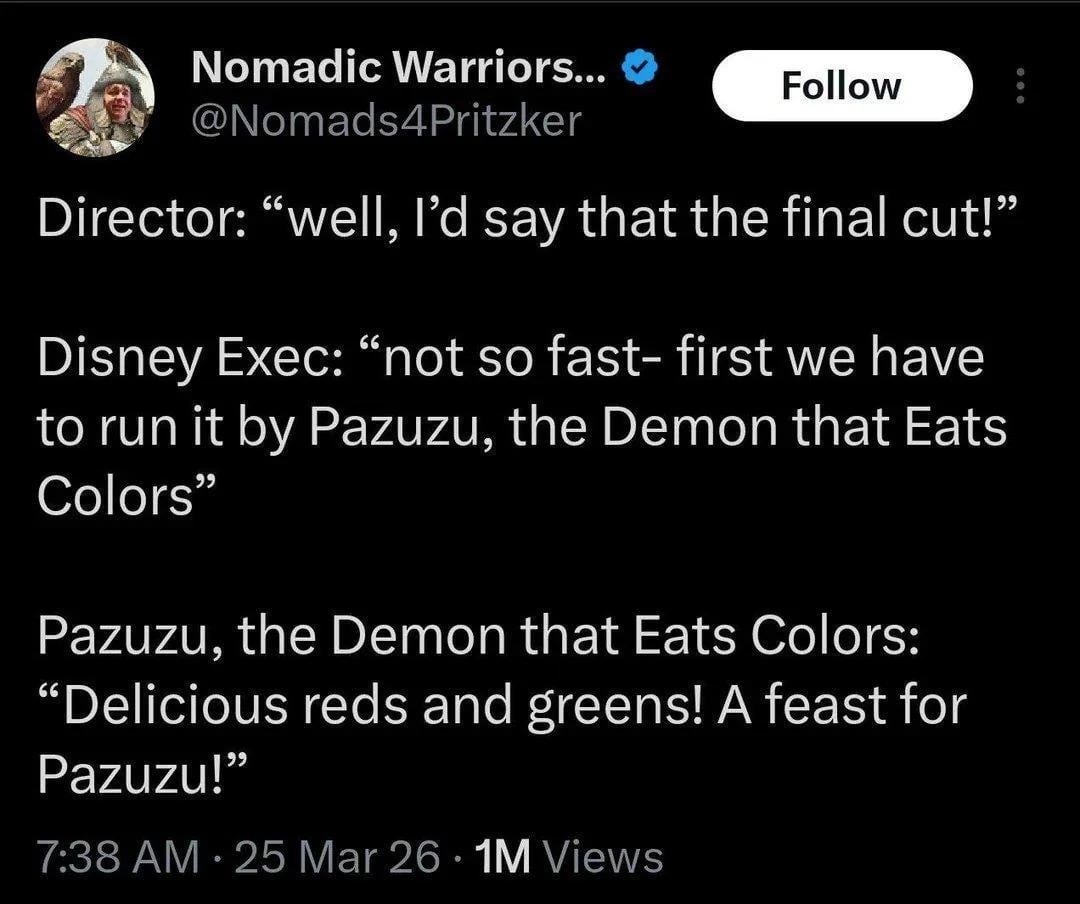
There is actually a really cool history of color grading and the advancement of computers in film technology. The movie O Brother Where Art Thou was the first movie to use full color correction, that was only possible with newer computer assisted editing, and lead to a Oscar award as well as future technical awards for its impact on film editing. Before that movie, color grading was seen as a last ditch effort to compensate for failings of a lighting director or poor cinematographer and was expensively and painstakingly done on select frames individually, and never done on more than a scene or two. After computers were used for digital editing and made it cheap, fast, and easy (relatively), it has become the standard. And now with digital cameras, it is literally baked into the process. It’s a really fun rabbit hole to go down, would recommend.
That’s widely reported, but not true. Maybe the first Hollywood movie to be released with full color correction.
The first movie that went thorough a complete digital processing step was the Swedish movie “Zingo” in the mid 90s. There is another one that got partially processed, but the name eludes me just now.
Anyway, Jason X was also color graded before O Brother Where Art Thou, but eventually did not get released for a couple of years.
It’s probably correct that an obscure Swedish comedy didn’t have any influence on modern editing techniques though, so I only consider those references valid for the question of who really did it first.
The snow should be all gone from the mountains in the second pic
and the farm replaced with a data center.
Indie movies are better about this.
Obsession, I Saw The TV Glow, and Titane are all much more color vivid
I really need to watch I Saw the TV Glow…
It’s a solid piece of cinema.
Also worth checking out Teenage Sex and Death at Camp Miasma
You know I didn’t like that movie that much but yeah the look of it was very spot on.
Like don’t get me wrong, it wasn’t bad, just was expecting more given the hype. Inde was sooo good though.
I on the other hand got PTSD from it since so many things that happened were familiar lol
Colour grading like this has less artifacting on streaming services is the primary reason i think
In the 00s everything was brown.
Part of it is the studio doesn’t work as hard on scene color and lighting and shading because of the assumption it can all be done in post.
You forgot about the 2010 years, where color was completely overblown and even the dirty dishes were almost glowing.
This is a weird observation to me. I’ve been watching a lot of documentaries recently. The color and image quality is orders of magnitude better than ten years in the past. Sometimes they actually oversaturate to the point it’s hard not to be put off by it. Is OP watching crime movies and expecting Planet Earth visuals?
He isn’t alone in this observation, check this minidoc about it out: LINK
Alright I will watch when I get time but still remains my question honestly. The image shown is a landscape like one would expect in a nature documentary. Which I can definitely say most are not dull, under saturated, and sad.
Tap for TL;DW
The video claims High Dynamic Range makes movie creators less creative with contrast and lighting, leading to a flat look.
As a hobbyist photographer (for what it’s worth), “contrast” is the first lever I reach for in editing to make a photo look “good”. I love playing with lighting and shadows and contrast. But that’s my personal style; I have a mate who loves the saturation and colours more.
I don’t know why you got downvoted, I did the opposite. You sound like me actually. I’m an amateur photographer who recently upgraded equipment, so despite aspirations of being better I’m no expert, but I do the same. I agonize over the exposure, contrast, and output tone range a lot. I did watch this video and while I agree that there probably are more boring looking movies now, I also wonder if it’s a part of a larger trend of less artistic movies period. I think the movies I end up liking are normally the more visually appealing ones, and while maybe I’m a dummy who just likes things that look good, it feels like some movies just have better… everything. Writing, direction, art direction, casting, everything. The video pointed out some examples of meh photography, but it actually did a lot more of showing good (older) photography, so I’m not sure I’m convinced it’s a problem for me per se. Some of the top notch movies that come out today are astounding to look at. For example he mentioned Nosferatu. That’s been a while at this point but damn that movie was amazing visually, and every other way. Sorta weird ending but I digress. Yeah maybe art direction is more meh now, but the movies I expect to look great typically do. /shrug
I remove my own upvote from my comments. It’s my weird thing I do haha
Yeah I agree, it feels like movies are sacrificing “art” for “clarity” if that makes sense. It reminds me of the yellow paint and popup tutorial plague in videogames. In older movies it kind of felt like you had to pay attention and notice details, and it was worth re-watching things because you’d experience it differently each time. Nowadays I don’t bother, because the entire experience has all been spoon fed directly into my nervous system
4:3 vs 8:5