Considering the 1920s were a time of significant labor and anti-labor violence, the direct threat of violence may be nonzero here.
But mining has always been miserable work, essentially. For much of history it was split between (low-paid) itinerant workers who needed the money when the farms weren’t in need of extra labor, and (okay-paid) professionals with specific skills. For reference, and please forgive my obsession from coming into play here, a free miner in the period of the Roman Empire could make as much as a soldier, and with similar short-term benefits besides. On the other hand, when labor was lacking, they would simply send criminals into the mines for the backbreaking labor… and six months as a mining slave was considered as good as a death sentence.
“You get stuffed in a tiny elevator now” may actually be less horrific than “You have to walk all the way down or be lowered by a rope; be careful not to fall and break your neck.”


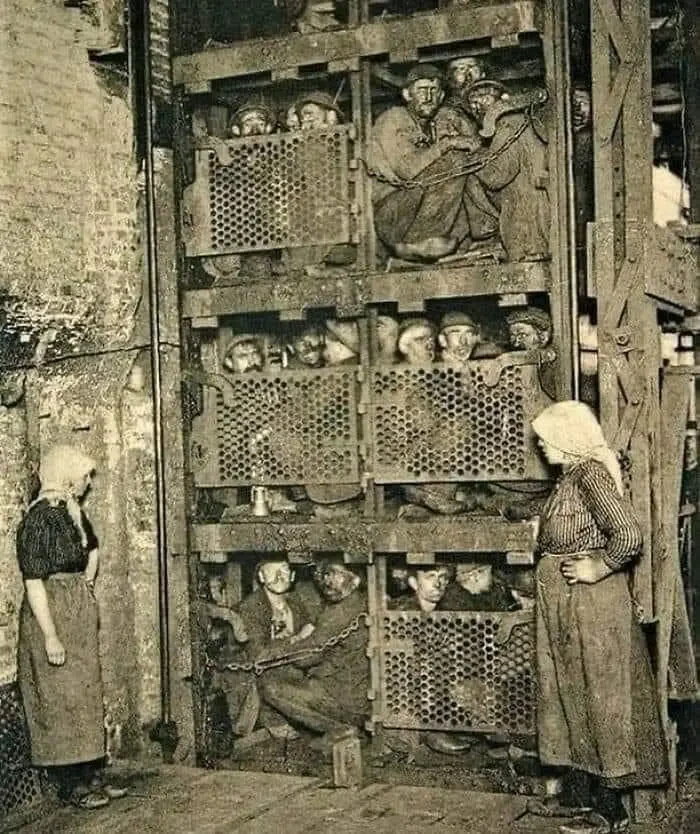
Considering the 1920s were a time of significant labor and anti-labor violence, the direct threat of violence may be nonzero here.
But mining has always been miserable work, essentially. For much of history it was split between (low-paid) itinerant workers who needed the money when the farms weren’t in need of extra labor, and (okay-paid) professionals with specific skills. For reference, and please forgive my obsession from coming into play here, a free miner in the period of the Roman Empire could make as much as a soldier, and with similar short-term benefits besides. On the other hand, when labor was lacking, they would simply send criminals into the mines for the backbreaking labor… and six months as a mining slave was considered as good as a death sentence.
“You get stuffed in a tiny elevator now” may actually be less horrific than “You have to walk all the way down or be lowered by a rope; be careful not to fall and break your neck.”
“Because we paid full price for you and don’t want to replace you on day one.”